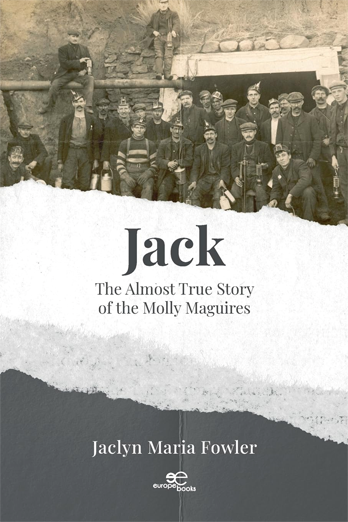
Jack The Almost True Story of the Molly Maguires
Blurbs:
Jaclyn Fowler was destined to write a novel about John (“Black Jack”) Kehoe. Kehoe’s unflinching courage stands in sharp contrast to the perfidious, relentless opposition of Franklin B. Gowen, the anti-union railroad lawyer. Her research is impeccable; her characters jump off the page and her story will turn over the heart of any reader who has one. I must add that this is a novel ensconced in a brilliant frame-Jaclyn’s own story of growing up in an Irish-American family. Fowler’s stunning rendering of Kehoe’s heroic tale is dramatic, Dreiserian and delicious.
~J. Michael Lennon, author of Mailer’s Last Days: Remembrances of a Life in Literature
Jaclyn Fowler has created an unforgettable historical novel. Her powerful writing is enhanced by extensive research as she debunks Pennsylvania lore concerning Jack Kehoe, the falsely accused Molly Maguire, charged with practicing vigilante justice in the northeastern coalfields. Fowler seasons the story with an autobiographical slant. Having grown up in the area listening to her father, also named Jack, render tales of the mining atrocities, Fowler aims to right the wrongs of that difficult time. Jackie Fowler’s novel deserves to be set alongside Angle of Repose, Wallace Stegner’s Pulitzer Prize winning novel.
~Nancy McKinley, author of St. Christopher on Pluto
Shipping & Delivery